
Inside Parallel Loop
The organisational
AI stack.
Your systems, context, models, execution and evaluation. Working as one governed AI stack.
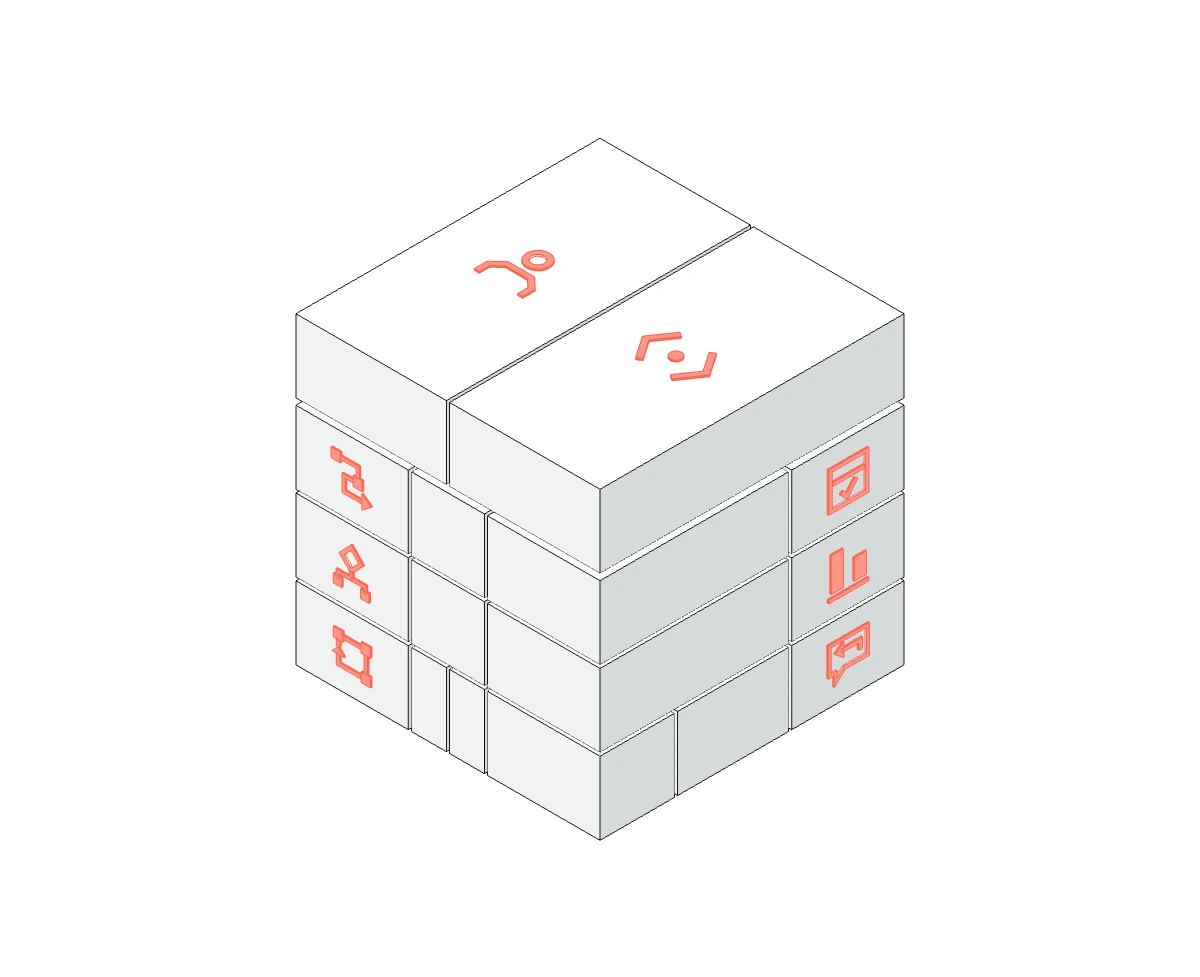
One connected system
People and agents enter through Interfaces. Action and evaluation span the whole stack.
Inside, Control and Intelligence connect to a shared foundation of Data and Model Infrastructure.
Scroll to explore what’s inside.Interfaces
Entry points for humans and agents into the organisation’s AI stack.
- HumansPeople ask questions, request work and review results through web and chat. Each interaction enters the stack with the caller’s identity, permissions and relevant project context.
- AgentsAgents reach the organisation’s systems through APIs, tools and MCP connections. These entry points connect agent requests to the stack’s identity, permissions and execution controls.
Control Plane
Every run starts with the caller, role, project and permitted connections.
- The PlaybookDefines who is making a request, what they can access and how work is orchestrated. It gives each run its starting identity, role, project and permitted connections.
- Agent Integration ServiceConnects the apps and integrations a run can use, with OAuth scoped to the user. This gives agents a governed route into the organisation’s existing systems.
- Skills PlatformSupports authoring, versioning and deployment of skills. These skills become available to the Harness as part of the approved combination of capabilities used for a task.
Intelligence Plane (Harness)
The execution manifest invokes a Harness session with authenticated identity, permitted access, model and skill combination, runtime and memory.
- Identity + AccessCarries the authenticated caller, permissions and connected systems into the Harness session. The run uses that access context when working with the organisation’s tools and information.
- Model + Skill ChoiceBrings the approved model and skill combination into the Harness session. This connects the capabilities selected for a task with the identity, access and runtime needed to execute it.
- Personal Agent MemoryMaintains personal and agent-specific context across interactions. It gives each agent continuity within the Harness, alongside the shared organisational knowledge and project context held in the Data Plane.
Data Plane
What the organisation knows and produces is versioned and permissioned.
- Versioned ContextKeeps a history of organisational context and where it came from. This gives the stack a versioned record of the knowledge used in its work, with provenance preserved.
- Project WorkspacesGroups the context associated with a particular project. It gives people and agents a project-scoped body of information to work with inside the organisation’s versioned and permissioned Data Plane.
- Sources & ArtifactsKeeps source material and the work produced from it as part of the organisation’s knowledge. These records provide evidence and context for tasks running through the stack.
- Systems of RecordConnects AI work to the authoritative systems the organisation already relies on. Their records provide established business information alongside project context, source material and generated artifacts.
Model Infra Layer
Model choice, routing and cost remain controlled outside the task prompt.
- GatewayManages model access through keys, routing and spend tags. It keeps the route to inference and its cost attribution in the infrastructure layer, outside individual task prompts.
- ObservabilityRecords traces, cost and usage for model operations. These signals show how the infrastructure is being used and provide evidence for evaluating execution choices across the stack.
- Inference ProvidersMakes approved inference endpoints available to the stack. Runs reach the selected model through this infrastructure, while the Gateway manages the routing and access used for those requests.
- ModelsProvides the commercial or open-weight models available to the organisation. The Harness uses the approved model and skill combination for a task, supported by the surrounding model infrastructure.
Action Layer
The Action Layer is where organisational work is executed across the stack.
- WorkflowsRuns durable jobs made up of multiple steps across the stack. Workflows bring together the required context, tools and execution to carry out the organisation’s work.
- Rules EngineApplies defined rules to facts to determine outcomes. It gives organisational workflows a way to express decisions that should follow established business logic within the Action Layer.
- AI-Native State EngineMaintains the changing state of projects, emails, threads and other entities. This gives work across the stack a current record of the organisational items it acts on.
Evals Pipeline
A separate feedback layer evaluates quality, cost and policy across the stack.
- Golden DatasetBrings together synthetic and reviewed test cases for evaluating the stack. These cases provide a shared basis for assessing quality, cost and policy across different execution choices.
- Harness × Model BaselinesCompares different Harness and model combinations against a shared evaluation baseline. This helps teams assess execution choices using the test cases and signals gathered by the Evals Pipeline.
- Trace + User FeedbackBrings observed production traces and user feedback into the evaluation process. These signals complement the test dataset, showing how the system performs when people and agents use it.